

The Oncology Well-being Unit provides comprehensive care for cancer
patients, working in coordination with the other proposed treatments and the
professionals involved in the process. It follows a collaborative approach to care that improves the quality of life of patients and their families, centred on integrating disciplines backed by solid evidence: mental health, physiotherapy, physical activity, and nutrition.
Each of these disciplines retains independence over its own processes and
highlights the unique nature of its own care work, but by coming together under
a single umbrella—the Oncology Well-being Unit—it delivers comprehensive
care to cancer patients. This coordinated and structured model of operation
results in a collaborative approach in which the Unit’s professionals share their expertise, enabling them to respond to patients’; real needs at every stage, thereby improving the quality of life of the patient and those around them.
The Unit plays an active role within the hospital, working in coordination with the centre’s other professionals and participating in the development of personalised treatment plans for each patient.
Oncology Well-being Unit Care Team

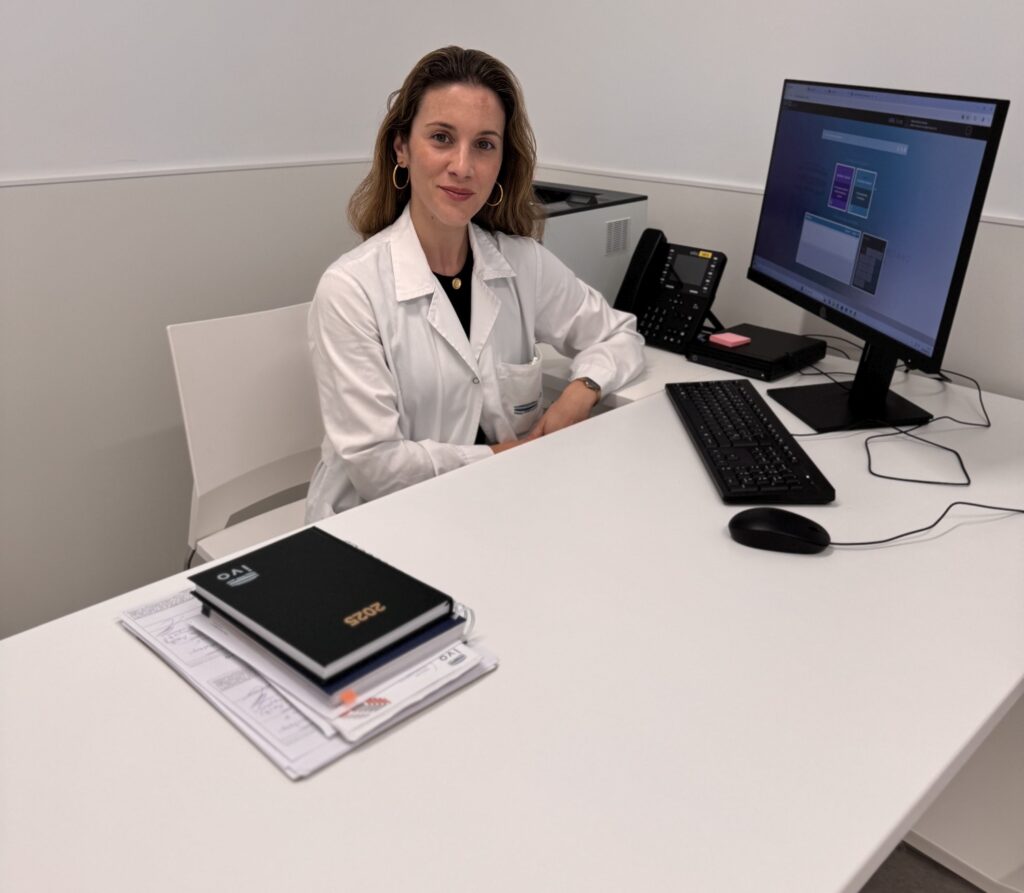
Mental Health Unit
Psychiatrist
- María del Cerro Arastey
Psychologists
- Ana García-Conde Benet
- Pilar Llombart Fuertes
- Rocío Romero Retes
Physiotherapists
- Elisa Bañuls Sendra
- Salvador Gea Mahiques
- Juan B. Portolés Simeó
Dietitians
- Bianca T. Muresan Oltean
- Iulia Scorojanu
Nurse
- Carmela Ara Carrascosa
Oncology Physical Activity
- María Elena García Roca
- José Nogueserola Micó
Oncology Well-being Unit Coordinator
- Elena Oliete Ramírez
Mental Health
A cancer diagnosis has a profound emotional impact on both patients and their
family members. Anxiety, fear, anger, grief, and uncertainty are feelings that
may arise at any stage of the illness.
Find out more
Reflecting on our own life story can offer us alternative perspectives. Sometimes, looking at our difficulties through a broader lens can make it easier to manage the situation, thereby improving how we cope with an illness.
The Mental Health Unit, comprised of three psychologists and one psychiatrist, addresses both the psychological aspects and the adaptation needs that arise throughout the course of the illness. It is also aimed at cases where a psychiatric assessment is deemed necessary.
Treatment is provided through interviews and individual therapy, and is complemented by group sessions focused on emotional management and coping with uncertainty. During these sessions, we practise mindfulness techniques, identify personal strengths, and provide tools to help manage the fear of relapse. Despite the difficulties associated with the illness, it is possible to find purpose and meaning in experiencing cancer.
Accepting the change brought about by the diagnosis involves recognising that life has changed and reflecting on what we truly value, rather than focusing solely on the illness. This helps patients adapt to new circumstances and redefine their priorities.
The fundamental principles of mental health care are:
- Patient-centred care.
- An interdisciplinary approach: physiotherapy, nutrition, and mental health.
- Respect for the patient’s dignity, autonomy, and values.
- Continuous assessment of emotional and psychosocial distress.
Approach to intervention:
- Given that the criteria are centred on the individuality of the patient and their needs throughout the course of the illness, it is difficult to establish a fixed intervention process; therefore, we propose that care for cancer patients should, first and foremost, be flexible, individualised, and based on the evolution of their needs throughout the course of the illness and their life.
- One of the key features of care should be its ability to adapt to the patient’s hospital routines, thereby improving the quality of care. This is why we make an effort to schedule a large portion of care visits to coincide with other medical appointments.

Physiotherapy
Oncology physiotherapy is a branch of physiotherapy aimed at all people with cancer. Its goal is to restore, improve, and maintain a person’s optimal functional abilities, as well as to prevent, treat, and minimise the side effects arising from the disease and its treatments throughout the entire course of the disease, thereby improving quality of life, independence, and well-being.
Find out more
Given the complexity and varied effects of cancer and its treatments, physiotherapy intervention must be highly personalised and adaptable, addressing the patient’s changing needs throughout the course of their illness.
The Oncology Physiotherapy Unit works in collaboration with the mental health, nutrition, and oncological physical activity and oncology units, forming a multidisciplinary team that seeks a comprehensive and holistic approach to patient care. Collaboration among these units allows us to offer a comprehensive treatment programme, focused not only on physical rehabilitation but also on the emotional, nutritional, and functional well-being of the cancer patient. This patient-centred care model ensures that all aspects of the patient’s health are addressed, providing more effective and personalised care.
y personalizada.
Through oncology physiotherapy, delivered by three physiotherapists, we take a holistic approach to managing various side effects, improving:
- Cardiorespiratory capacity.
- Chewing and swallowing, in cases of oropharyngeal dysphagia.
- Generalised oedema and secondary lymphoedema.
- Pain management.
- The range of motion in joints and soft tissue flexibility.
- Strength, motor control, and sensitivity.
- Balance, coordination, and gait.
- Cancer-related fatigue.
- Pelvic floor dysfunctions (urinary incontinence, faecal incontinence, dyspareunia, pelvic pain, constipation).
- Mobility and independence in daily life activities, and participation in social activities.
- Return to work or study.
- Quality of life throughout all stages of the disease.
- The risk of associated comorbidities.

Nutrition
Adequate nutrition, both during and after cancer treatment, is key to maintaining strength, preventing or treating malnutrition, improving tolerance to treatments, and promoting recovery and long-term well-being.
Find out more
Oncology Nutrition intervention is based on patient-centred care, adapted to the patient’s clinical, functional, and social situation throughout the entire cancer process. Nutritional care is provided with respect for the patient’s dignity, autonomy, preferences, and values, forming part of an interdisciplinary approach in coordination with medical oncology, surgery, radiotherapy, nursing, physiotherapy, psychology, and other relevant services.
Nutritional and functional status are assessed and monitored on an ongoing basis, allowing the intervention to be adjusted to clinical progress, the treatments received, and the different stages of the disease.
At the Oncology Nutrition clinic, there are two dietitians who specialise in oncology working to:
- Assess nutritional status on an individual basis.
- Adapt the diet according to the type of treatment and stage of the disease.
- Prevent and treat malnutrition, which is common in many cancer patients.
- Manage side effects that hinder food intake (nausea, vomiting, mucositis, loss of appetite, taste disturbances, diarrhoea, constipation, etc.).
- Provide nutritional education, practical guidelines, and adapted meal plans.
- Support the patient and their family throughout all stages of the process, promoting well-being and quality of life.
Nutritional intervention makes up part of the multidisciplinary approach for cancer patients and is carried out in a coordinated manner across different care settings, including hospitalisation, outpatient consultations, and follow-up care. This coordination allows the intervention to be adapted to the patient’s clinical progress, facilitates continuity of care following hospital discharge, and ensures comprehensive, person-centred care throughout the entire course of the disease.
integral y centrada en la persona a lo largo de todo el proceso oncológico.

Physical Activity
Oncology Exercise is prescribed and supervised by two professionals with the objective of preventing and/or mitigating the side effects of treatments and improving patients’ health, quality of life, and survival.
Find out more
Physical exercise, planned and supervised by professionals, improves tolerance to treatment, reduces side effects, and increases survival rates. It is important to maintain a regular level of physical activity, adapted to each patient’s individual circumstances. Various studies show that walking for at least 30 minutes a day can reduce the risk of recurrence by at least 30–40%, as well as improving quality of life during and after treatment and alleviating adverse effects such as fatigue or the after-effects of chemotherapy.
Supervised, prescribed, and planned physical exercise in the field of oncology is now an evidence-based therapeutic intervention. Its benefits encompass physical, clinical, psychological, and prognostic aspects, and depend largely on the programme being properly adapted to the individual and supervised by qualified professionals.
In the Oncology Physical Activity Unit, physical exercise programmes are developed under the supervision of two specialised professionals (Graduates in Physical Activity and Sport Sciences) and are based on scientific evidence.
Benefits of physical exercise:
- Reduces cancer-related fatigue.
- Improves body composition.
- Strengthens the immune system.
- Reduces osteoarticular pain.
- Prevents cardiotoxicity.
- Improves quality of life.
- Increases the survival rate.
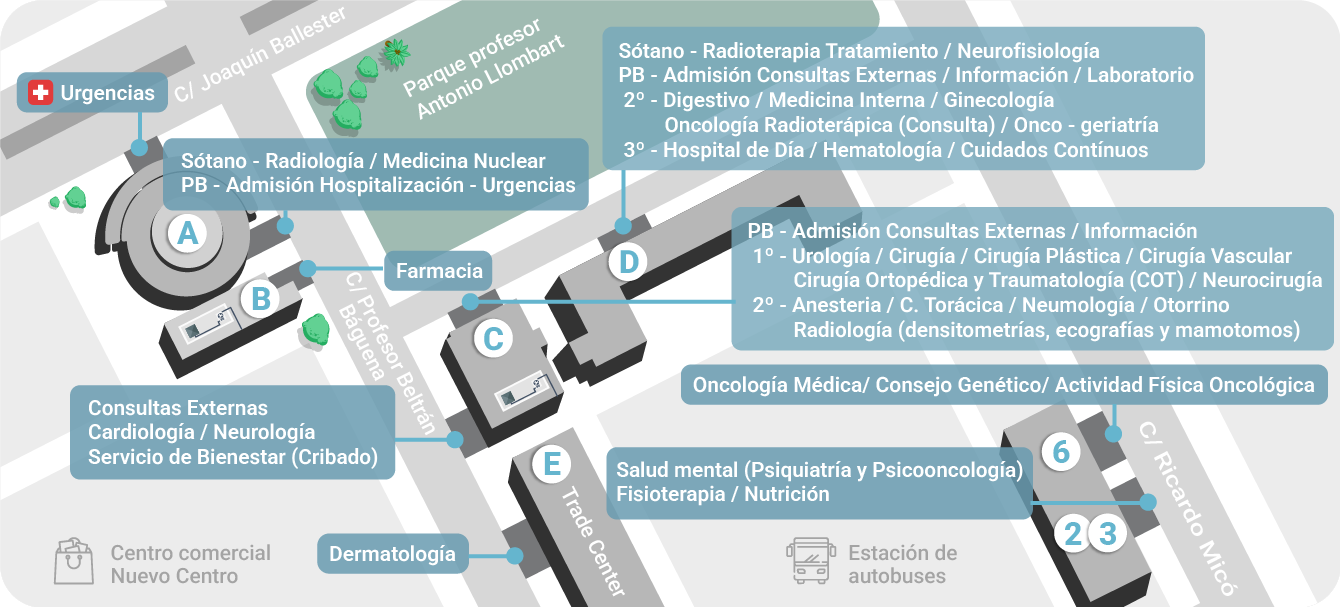
- Location of the Well-being Unit
C/ Ricardo Micó nº3
46009 Valencia
UNITS 2/3
Mental Health (Psychiatry and Psycho-Oncology) / Physiotherapy / Nutrition
UNIT 6
Oncology Physical Activity